

SEO Performance Metrics How to Track and Measure SEO Results

Maryna Semeniuk
Author
Head of Marketing
Maryna Semeniuk
Pavlo Famuliak
Fact cheked
Co-founder
Head of SEO
Pavlo Famuliak
Fact cheked
Publication date: 07.02.2025
Updated: 07.02.2025
Reading time: 14 minutes
2758
Post_hero_bg
Home
Balance
Laptop

SEO Performance Metrics

SEO is an ever-evolving field and tracking the right SEO metrics is crucial for measuring success. Without proper SEO measurement, it’s impossible to determine whether your efforts are driving real results or if adjustments are necessary to enhance performance. This guide will explore the most important SEO metrics you must track to ensure your website performs at its best. By tracking these key indicators, you can gain insight into your site’s strengths and weaknesses. Thus, you will have reasoned judgment on how to push your online presence to the next level. Be it visibility, more traffic, or conversions, the expertise in these metrics will give you the power to do so confidently and with a high degree of accuracy.
High-level SEO Metrics You Should Be Monitoring

  • 1 Organic Traffic
  • 2 Keyword Rankings
  • 3 Organic conversions

Tracking SEO performance metrics will be better able to find opportunities and discover what does or doesn’t need attention in your strategy. Let’s start discussion of the top SEO metrics which no marketer should ever miss for complete assurance in offering unparalleled digital advantages.

  • Organic Traffic

    Why Organic Traffic Matters

    Organic traffic refers to the number of visitors to your website, directed via search engines without any influence by paid advertising. It’s considered a strong indication of effective SEO practices indication of proper ranking of a website, targeting relevant traffic. A great deal of organic traffic could signal that your website addresses the user’s need and intent while browsing for certain things or information; thereby, the websites also build brand awareness and gain customer engagement.

    According to a study by BrightEdge, 53.3% of website traffic comes from organic search, making it the most significant channel for attracting users.

  • How to Track Organic Traffic

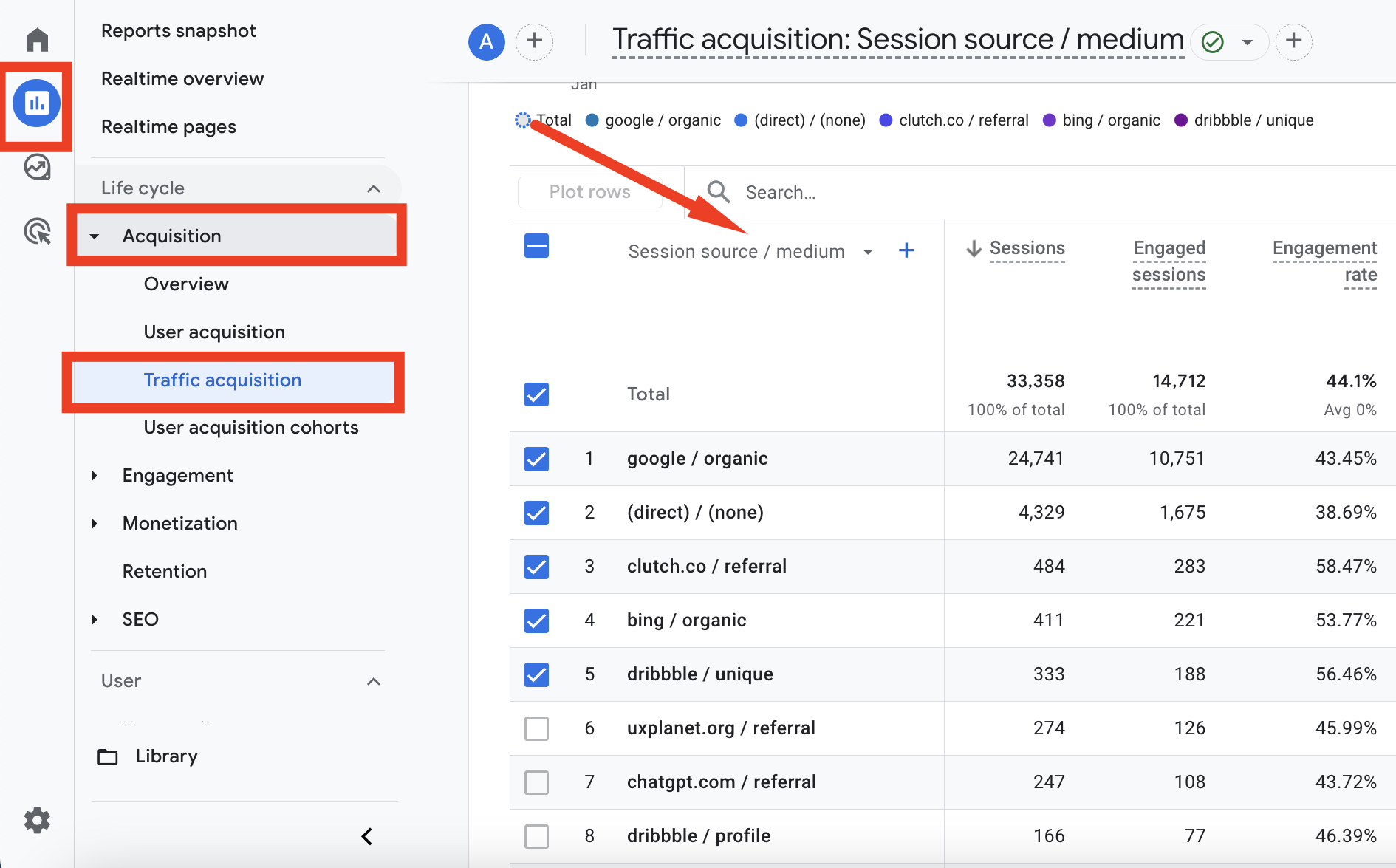
    The best way to track organic traffic is through Google Analytics:
    Google Analytics → Reports → Acquisition → Traffic acquisition

How to Track Organic Traffic

SEO Metrics – google organic traffic

Other useful tools providing insights into organic traffic performance include:

  • Google Search Console – track what search queries drive traffic and performance reports
  • SEMrush/Ahrefs: analyzes organic traffic trends and competitive analysis.

These tools will help you dive deeper into where your traffic is coming from and give you data-driven decisions to enhance your SEO strategy.

  • Keyword Rankings

    Why Keyword Rankings Are Important

    The ranking of your website for target keywords determines the visibility and traffic it will receive. Usually, the higher the ranking, the more organic clicks you receive, which might result in greater opportunities for conversion and revenue. Keyword rankings will, therefore, allow you to track the effectiveness of your SEO effort and make the right changes toward better-performing targeted keywords.

  • Tools to Measure Keyword Performance

    • Google Search Console: It tracks the search queries and rankings, therefore showing the performance of the keywords.

    • Ahrefs: Provides keyword ranking history and competitive analysis.

    • SEMrush: Tracks keyword movements and competitors to stay ahead in the market.


    These tools let you observe changes in keyword rankings over time and take action proactively against changes in algorithms and market trends.

  • Organic Conversions

    Why It’s Important

    SEO is not just about driving traffic; it’s about converting it into sales, sign-ups, or downloads – which also grows your revenues. Conversions will track the return on investment for SEO and give you a clear picture of how your efforts are helping the business objectives. The knowledge of conversion rates lets you optimize your site for a better user experience and greater engagement.

    Research indicates that organic search has a 14.6% conversion rate, compared to just 1.7% for outbound leads like cold calls or direct mail.

  • Where to Track Conversions


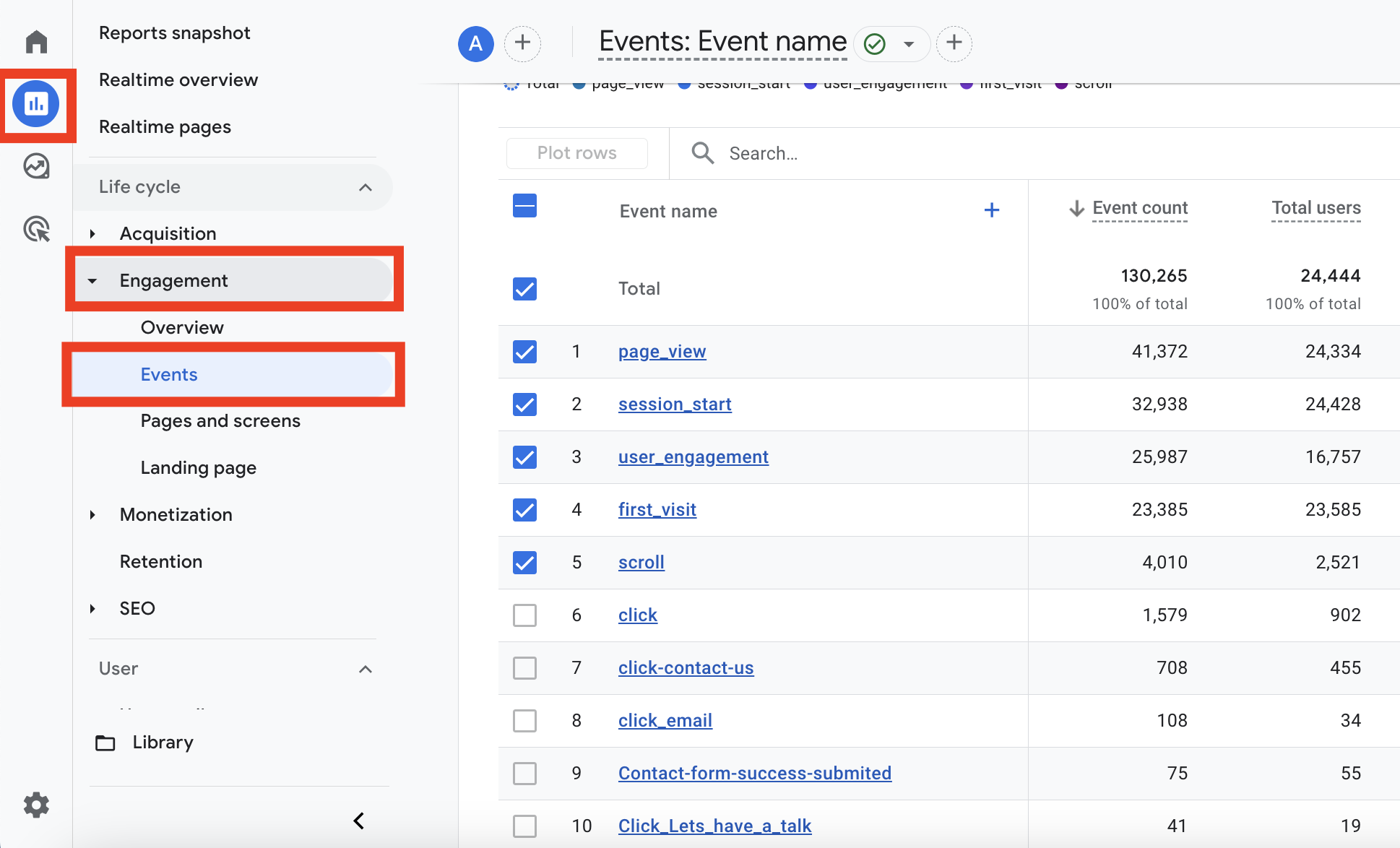
    • Google Analytics utilizes Goals & E-commerce tracking to monitor conversion events.

    • Google Tag Manager tracks button clicks, form submissions, etc.

    Google Analytics: Reports → Engagement → Events.

How to Track Conversions

GA4 Goal Tracking
  • What to Track Conversions


    • Lead form submissions

    • Demo requests

    • Trial subscription

    • E-commerce sales

    • Newsletter signups

    By focusing on these conversion metrics, you can determine which areas of your site are the most effective in converting site visitors into customers and can perfect your approach for the best outcome. This will give you full insight into your conversion data, empowering you to make strategic decisions toward growth and success.

Other SEO Performance Metrics

  • Impressions
  • CTR
  • Backlinks and Referring Domains
  • DA / DR
  • Conversion Rate
  • Customer Acquisition Cost
  • Bounce Rate
  • Page Speed and Load Time
  • Indexed Pages
  • Content performance

Excluding the above-mentioned metrics, there exist a few other SEO performance measures that are important in deeply analyzing the health and effectiveness of your website. These will give you an even fuller idea of user behavior, site performance, and the total success of the overall SEO strategy.

  • Impressions

    Impressions are the number of times your website appears in search results. If there are numerous impressions with a limited number of clicks, that may indicate that either your keywords rank low or bad CTR. This discrepancy can highlight chances to refine your content and improve its appeal to potential visitors.

  • CTR

    How CTR Affects Your SEO Strategy

    CTR gives the percentage of users who clicked through your result. This is one of the most important indicators of the appeal and relevance of your content. A low CTR can be indicative of bad headlines, meta descriptions, or irrelevant rankings with the suggestion that your content is not resonating or meeting expectations. An improved CTR means increased traffic and better engagement since it is a signal of how effective your search snippet is in the capture of user interest. By focusing on improving your CTR, you will be able to make your content stand out from the search results, which helps drive more visitors to your site and increases the potential for conversions.

  • Monitoring CTR Effectively


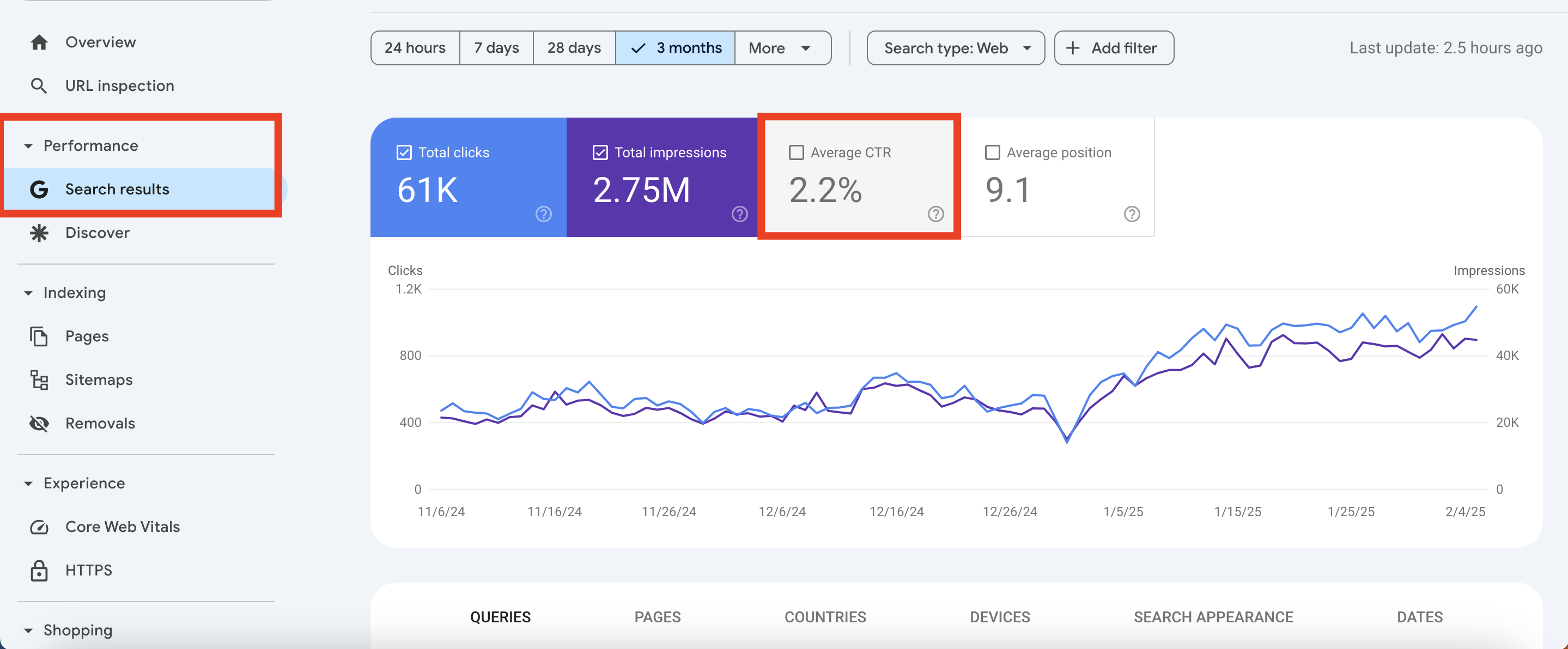
    • Google Search Console → Performance → Search Results

How to Track СTR

CTR tracking

Write more appealing title tags & meta descriptions to increase your CTR. You can create compelling and informative snippets that boost your click-through rates since they tell the user what they will get from your content.

Need SEO Expert Advice?

Stop wasting time and money on inefficient SEO strategies. Contact us for the best result!

  • Backlinks and Referring Domains

    Why Backlinks Matter for Authority

    Backlinks and referring domains are potent ranking factors that tell the search engines your content is reliable and worth paying attention to. Good-quality backlinks from authoritative sites can boost the credibility of your site manifold and improve its rankings. Building a robust backlink profile is important in establishing your site as a trusted resource in your industry. By cultivating relationships with reputable sites and earning valuable backlinks, you can strengthen your site’s authority and visibility, leading to increased organic traffic and improved search performance metrics.

  • Tools for Tracking Backlinks


    • Ahrefs (Backlink Explorer)

    • SEMrush (Backlink Analytics)

    • Moz (Link Explorer)

    The backlink analysis from these tools ranges from getting a whole outlook of your backlink profile to hunting new link opportunities or monitoring the quality of the current links. Using that information, you could create a well-planned and systematic approach to link-building with which high-quality backlinks from relevant, authoritative sources would not be difficult. This proactive way gives enhanced authority to your site for its long-term SEO success and visibility of content on search results.

  • Domain Authority (DA) / Domain Rating (DR)

    DA by Moz and DR by Ahrefs are important metrics, informing about website authority based on the backlink profile of the website. Generally speaking, a high DA/DR will tend to correspond with high performance in search engines because a high DA or DR indicates strong relevance and authority online.

  • Conversion Rate

    Why Conversions Are Critical

    A high conversion rate implies that your SEO strategy is yielding qualified traffic, not just clicks. This is a key metric for understanding how well your site converts visitors into customers or leads. It provides insights into the quality of your traffic and how effective your calls to action are. A strong conversion rate suggests that your content and user experience align with visitor expectations, thus yielding successful outcomes. By optimizing for conversions, you’ll be able to maximize the return on your SEO efforts and ensure your website contributes meaningfully to your business goals.

  • Measuring Conversion Rates in Analytics

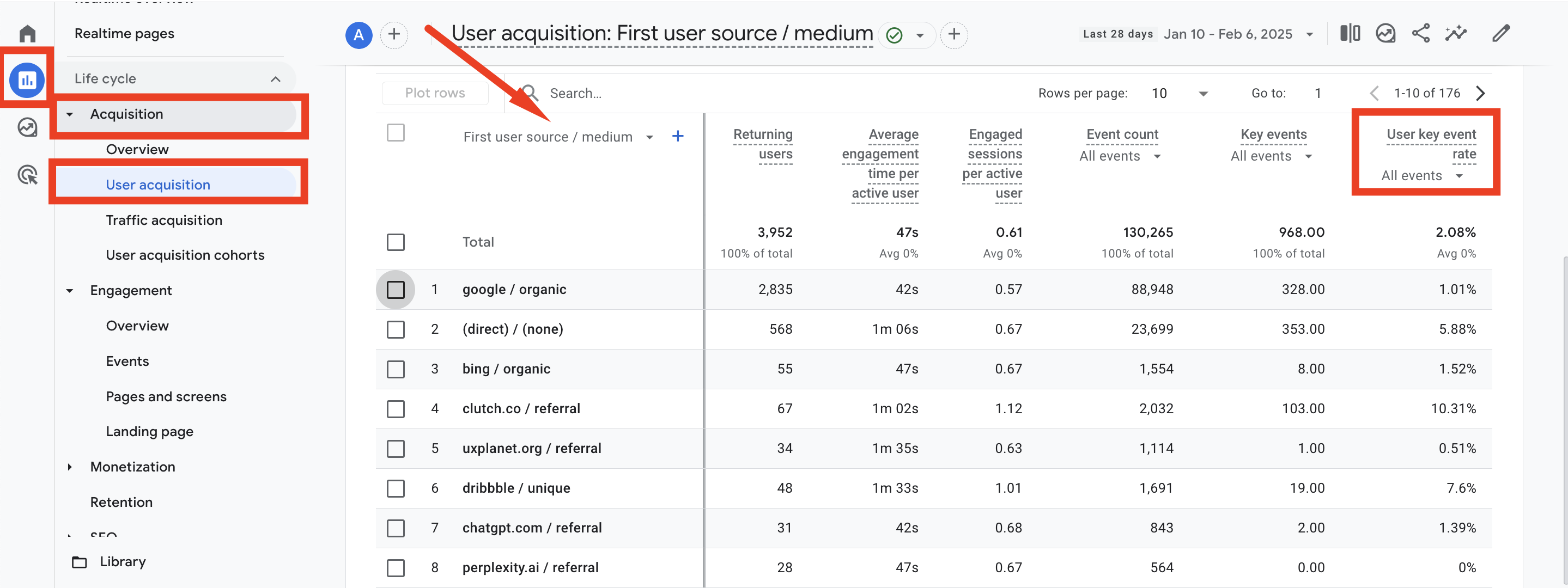
    Google Analytics: Reports → Acquisition → User acquisition → User key event rate.

How to Track Conversion Rate

GA4 Key Events Rate Tracking
  • Customer Acquisition Cost

    Why CAC Matters for SEO

    The CAC is a very important metric to let one decide how many resources are being spent in getting a new customer from organic search. Understanding the cost will become essentially important in determining how efficiently investments into SEO are made.

  • How to Measure CAC

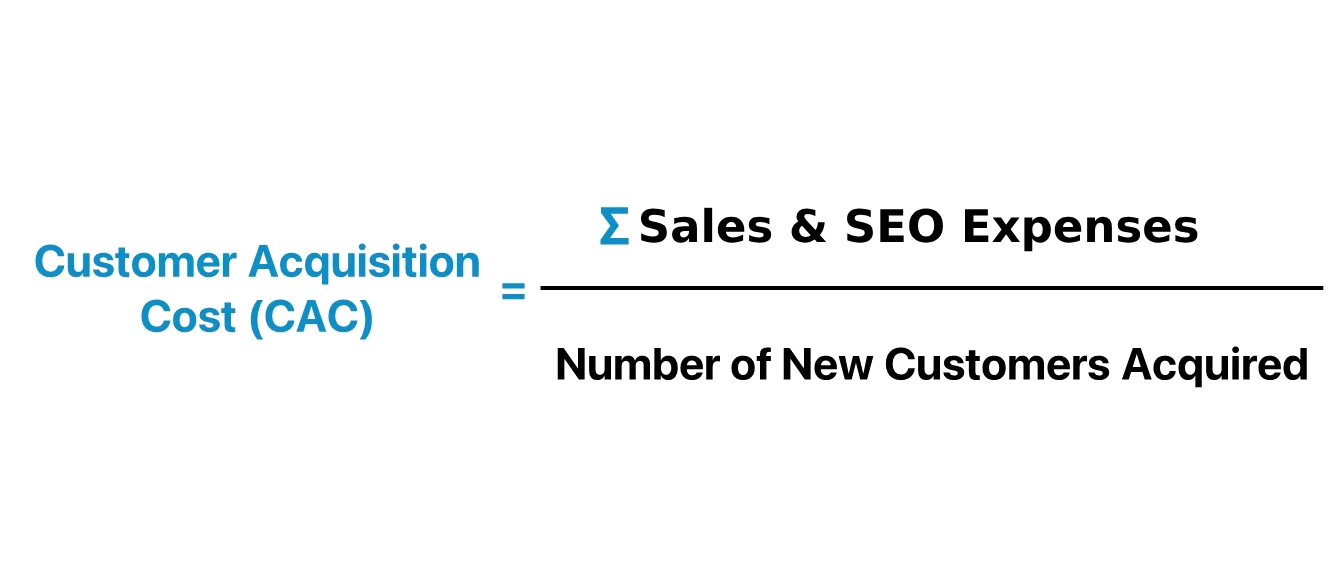
    Formula: CAA = (Sales + SEO Costs) / Number of New Customers from Organic Search

How to Calculate CAC

Customer-Acquisition-Cost-Formula-CAC

It will give you a clear picture of your acquisition efficiency. By regularly calculating and analyzing your CAC, you’ll know where exactly the cost needs to be optimized to improve the profitability of your SEO efforts. This will help you adjust your strategies and invest in tactics that work for you, contributing toward sustainable growth.

  • Bounce Rate

    When to Care About Bounce Rate

    A high bounce rate points to poor user engagement or slow loading, which may indicate that people either do not find what they need or are annoyed by the slowness of performance. In practice, it is relevant to note that some page types, like blog posts, have inherently higher bounce rates. This metric is watched for pages that may want to be optimized to retain users by offering better engagement. By understanding the context of your bounce rate, you can make informed decisions about where to focus your optimization efforts, ensuring your site provides an engaging and seamless experience for visitors.

  • Tools for Bounce Rate Insights

    Here, you can find in-depth views of the bounce rate across your website, where you can begin to find which pages need fixing. You can analyze and find patterns or trends from this data that may indicate deeper problems you would address with specific changes to improve user experience and lower bounce rates.

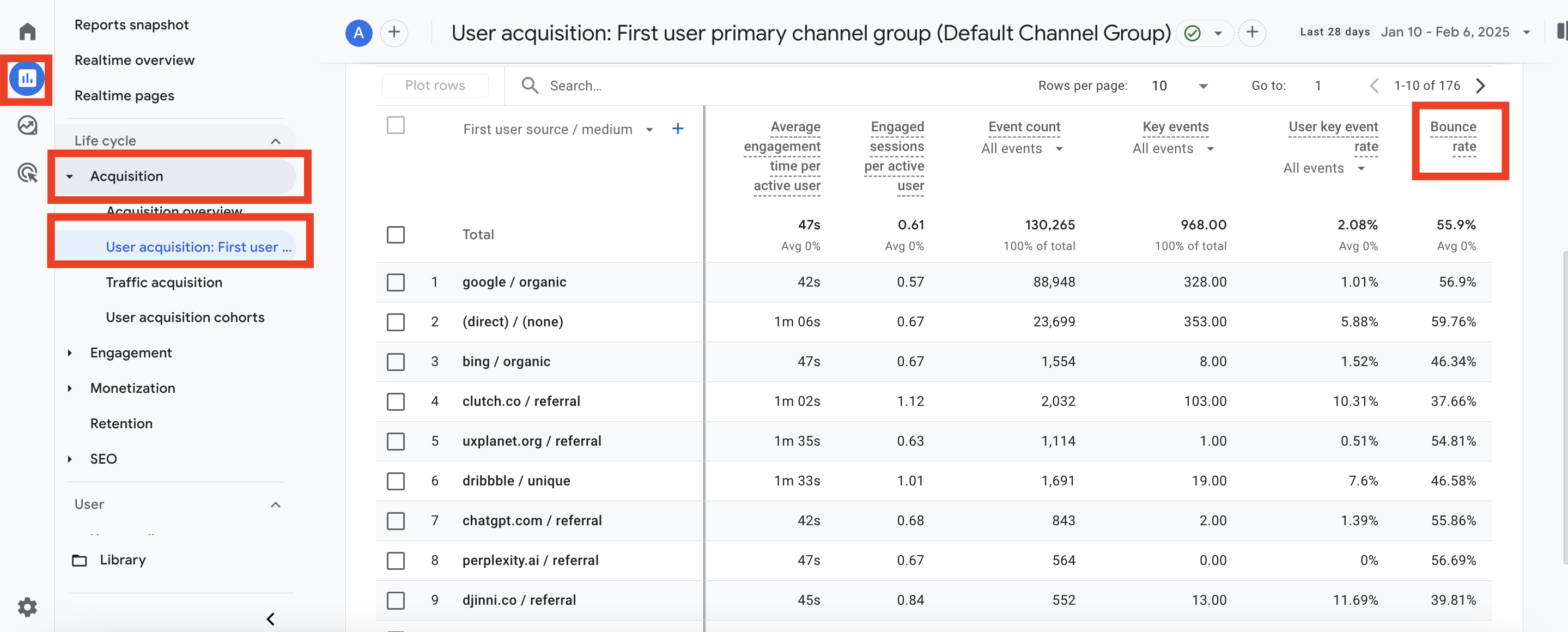
    Google Analytics → Reports → Acquisition → User acquisition

How to Track Bounce Rate

GA4 bounce rate tracking
  • Page Speed and Load Time

    How Page Speed Affects SEO

    Google gives priority to fast-loading sites because this means a better user experience. If the site is slow, it automatically increases the bounce rate and hence lowers the ranking. Page speed, therefore, is an important factor in SEO success. Fast loading of the site improves user satisfaction and can make them stay longer on the site, navigating more pages, hence improving your site’s performance along with its search engine ranking.

    Google’s research shows that the probability of a user bouncing increases by 32% if a page load time goes from 1 second to 3 seconds.

  • Tools to Measure and Optimize Speed


    This tool will enable you to gauge the performance of your site and help you meet the desired speed by the user and the search engine. By addressing speed metrics, you would have upgraded the performance of your site and moved closer to the success of your SEO.

  • Indexed Pages

    Ensuring Proper Indexing

    The foundation of your entire SEO strategy relies on making sure your pages get indexed. Pages that aren’t indexed just won’t show up in search results; your content would go completely invisible to potential visitors. It is really important to go into Google Search Console regularly to check your status there on the Indexing Coverage Report. This proactive approach ensures that all your precious content is indexed by the search engines and thus viewable by users, increasing the visibility and reach of your site.

  • Tools to Monitor Indexed Pages


    • Google Search Console-Indexing Status informs which web pages have been indexed and flags any errors that need to be addressed.

    • Screaming Frog-Excellent tool that crawls your site for issues with indexability and identifies technical SEO metrics issues to quickly improve. In this way, you will be able to improve the performance of your website in search engines and increase organic traffic by indexing your pages correctly.

  • Content Performance

    Tracking content performance is crucial to realizing which pages draw in the highest amount of traffic, backlinks, and conversions. One can analyze main metrics such as:


    • Time on the page to estimate user engagement and interest.

    • The engagement rate is an exact display of how far your content goes with your audience.

    • Social shares & backlinks to track the reach and authority of your content.

    Such knowledge helps you to know what works, and then you replicate the approach with other pages; this way, you can adjust your content to suit user needs and search engines. Continuous assessment and re-evaluation for improvement will sustain you toward a dynamic content strategy that can keep up constant growth and better engagement.

Conclusion

SEO success is all about monitoring the right metrics, not just rankings but conversions, engagement, and technical factors, too. By regularly monitoring these SEO metrics, you can refine your strategy, improve rankings, and maximize ROI. This holistic approach lets you adapt to changes in search engine algorithms and user behavior so that your website remains competitive and effective. A data-driven approach will drive decisions for growth and a better user experience, bringing you closer to your goals. This helps keep you alert with these metrics and make the right decisions while working in these always-changing SEO landscapes with success.

FAQs

  • How Can I Improve My SEO Metrics?

    Optimize for high-value keywords that are highly relevant to the search intent of your audience. Improve your on-page SEO: refine titles, meta descriptions, and content to be captivating yet informative; seek high-quality backlinks from reputed sources for massive uplifts in your site’s authority. Also, ensure that your website is mobile-friendly and has good page speed, as these are important for user experience and search engine rankings. Regular refreshing of content can also play a crucial role in your SEO.

  • How Do SEO Metrics Affect Search Rankings?

    Metrics are some of the most important indicators of the performance and relevance of your website. These include metrics like CTR, backlinks, and page speed that indicate to Google the value and relevance of your content. In this case, strong performance might translate to great search rankings since it signals to search engines that your content meets user expectations and demands. Second, user engagement metrics, such as time on page and bounce rate, further help search engines with quality information about your content and give the visibility of your site in the search results.

  • How Long Does It Take to See Changes in SEO?

    SEO is a long-term investment; one needs to be patient and avoid companies that guarantee SEO results fast. Typically, it takes 3-6 months for significant changes. In competitive industries, this may be longer as you fight for a seat at the table with established players and changing algorithms. By examining your weekly SEO metrics, you can identify incremental goals, and trends, and adjust your strategy more effectively. It is very important to continue optimizing and monitoring to achieve and sustain improvement. It’s important to remember that SEO is not a one-time effort but a continuous process that requires adaptation to the latest trends and algorithm updates.

  • Do Metrics Differ for Local and Global SEO?

    Of course, local SEO involves tracking a completely different set of metrics: Google My Business insights, local keyword ranking, and map pack performance. The business will understand better its visibility for particular geographic regions, enabling business people to create strategies targeted to the locality. Global SEO works with broader metrics such as keyword ranking internationally and traffic across the globe; this approach requires an expansionary approach so that it can fit diverse markets.

  • What Is the Best Way to Set SEO KPIs?

    Setting effective SEO KPIs involves establishing clear goals about traffic, ranking, conversions, and ROI. Follow your progress using tools like Google Analytics and Google Search Console, making data-driven decisions. By aligning your KPIs with the objectives of your business, you can make your SEO efforts truly strategic and impactful. This will keep you on track for desired outcomes by frequently reviewing and adjusting these KPIs in response to performance data.

  • What are the Key Metrics for SEO?

    Key metrics include organic traffic, keyword rankings, backlinks, referring domains, CTR, and conversions. These metrics provide a complete view of your website’s performance and are indispensable in finding the points of improvement and strengths. Moreover, metrics such as domain authority and social signals can give you even more insight into your site’s credibility and reach to help you refine strategies for maximum impact.

  • How is SEO Measured?

    SEO performance is measured using a mix of tools and platforms: Google Analytics, Google Search Console, and specific SEO tools such as Ahrefs, SEMrush, and Moz. These provide several insights into the performance of your website that you can use to refine your strategies for achieving your SEO goals. You’ll have a better view of user behavior, be able to track your performance over time and make data-driven decisions to improve your online presence by leveraging these SEO metrics to measure progress.

  • What Does SEO Metrics Mean?

    SEO metrics are the data points that help in measuring the performance of SEO, which gives a direction to businesses on how to optimize their strategy for better search engine rankings. Embracing a data-driven approach toward SEO enables a business to move with the competitive market, assuring sustained growth and competitive advantage.

GET COMMERCIAL PROPOSAL

Stop wasting time and money on ineffective SEO teams. Contact us for the best results!

Політика конфіденційності(Required)
I accept the terms and conditions privacy policy
Get an offer       Get an offer       Get an offer

Blog

Similar articles

Articles_5

How Long Does SEO Take to Work? [+ Tips for Faster Results]

Maryna Semeniuk 21.05.2025

With the current fast-moving digital marketing times, knowing how long SEO lasts to kick in will allow you to have the right expectations and come up with a good strategy. As exciting as the thought of overnight success may be, SEO is something that demands patience, precision, a ...

Articles_6

Marketing Strategies for Fintech Startups and Midsize Business

Maryna Semeniuk 03.04.2025

Innovation is driving progress in this changing fintech financial landscape, and thus, a sound marketing strategy is not an advantage but a prerequisite. Fintech marketing is in a state of radical transformation, backed by the speed of technology growth and shifting consumer aspi ...

Articles_4

How To Rank In ChatGPT: Best Practices 2025

Maryna Semeniuk 07.03.2025

ChatGPT has emerged as a mighty force, transforming how users receive and interact with information. Generating free traffic from Chat GPT is one of the high-potential b2b marketing channels in 2025. This guide provi ...

Articles_2

All-in-one Guide to B2B Marketing Funnels

Maryna Semeniuk 03.03.2025

The marketing funnel is not merely a strategy's path to success, attracting prospects. While businesses continue seeking to reach other businesses, developing an understanding and creating a B2B marketing funnel will transform one's approach: ensure high conversion rates and soli ...

Articles_1

22 Common SEO Issues And How to Fix Them

Maryna Semeniuk 20.02.2025

Navigating the myriad of SEO issues can be intimidating to businesses that are just starting or without technical expertise. Businesses need to change their strategies with every update the search engines are releasing on their algorithm updates and changes in user behavior. ...

Articles_6

How to Rank in AI Search Results Effective Strategies 2025

Maryna Semeniuk 19.02.2025

Nowadays traffic from AI search/assistants is no longer a privilege but a matter of survival and growth. As AI search engines continue to redefine how information is accessed and consumed, mastering AI search SEO becomes pivotal for businesses aiming to maintain visibility and re ...

Articles_4

Web3 Marketing: The Complete 2025 Guide

Maryna Semeniuk 18.02.2025

Web3 is digital revolution, it is a paradigm shift that will finally give consumers and brands their rightful due. This guide will go deep into details: strategies, benefits, and challenges for blokchain projects. The potential of Web3 is immense; the unparalleled opportunities i ...

Articles_3

B2B Marketing Trends You Need to Know in 2025

Maryna Semeniuk 13.02.2025

B2B marketing in 2025 is marked by rapid development and moving toward personalization and technology. Digital transformation has brought businesses together with their respective audiences in a way never experienced through customer-centric approaches and state-of-the-art techno ...

Articles_5

10 Best B2B Marketing Channels to Boost Your Revenue

Maryna Semeniuk 12.02.2025

For B2B marketing channels, staying ahead of the curve is essential for driving revenue and maintaining a competitive edge. In 2025, a few channels will be especially potent in reaching and engaging business audiences. This article delves into the top 10 B2B marketing channels, t ...

Articles_4

Web3 Community: A Comprehensive Guide 2025

Maryna Semeniuk 11.02.2025

Welcome to the future of digital interaction, whereby a Web3 community is in itself a living and breathing paradigm of decentralization, transparency, and, ultimately, a user-empowering force. By the beginning of 2025, the Web3 ecosystem has turned into one of the cornerstones of ...